Vertical Video Isn't a Format Anymore. It's an Industry.
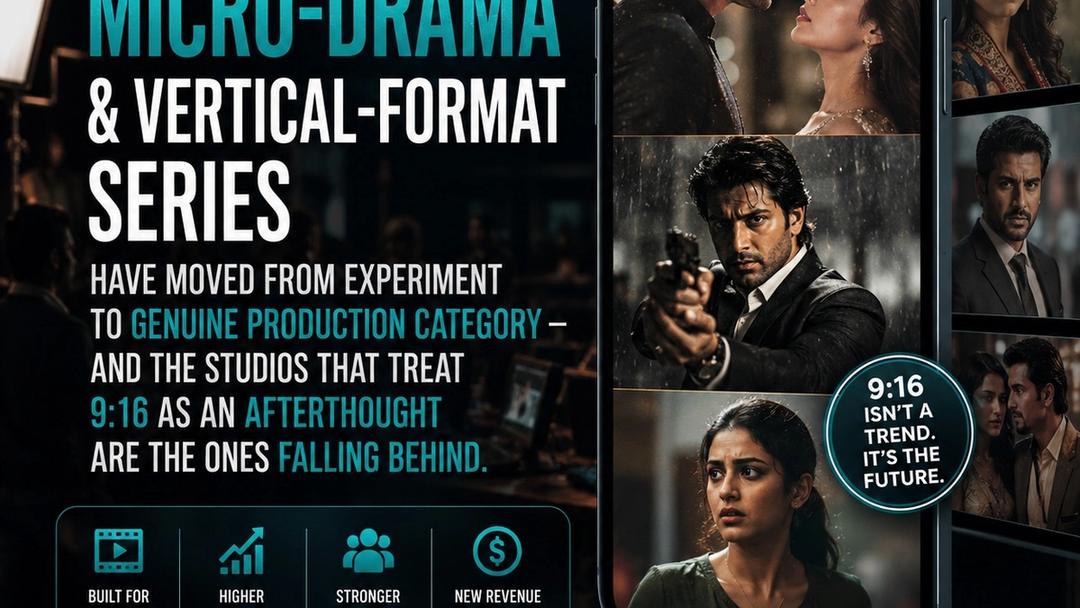
For years, "vertical video" meant a marketing team cropping a widescreen trailer down to fit Instagram. That era is over.
Micro-drama — short, serialized, vertical-format storytelling built for mobile from the first frame — has become a genuine production category in its own right, not a repurposing exercise. Platforms built specifically for this format have shown that audiences will pay for and return to short-form serialized drama the same way they do for traditional television, just compressed into a different shape and a faster release rhythm.
That shift changes what "post-production" actually means for this kind of content.
**Native vertical isn't cropped widescreen.** Composition, pacing, and even color grading behave differently in a 9:16 frame than a 16:9 one. A shot designed for a wide canvas and then cropped loses information — headroom, blocking, reaction shots that depended on peripheral framing. Finishing work built specifically for vertical delivery, from the first VFX pass onward, looks and feels different from a retrofit — and audiences notice, even if they can't articulate why.
**The release cadence is unforgiving.** Micro-drama series often ship daily or near-daily episode drops, not the weekly or seasonal cycle traditional television runs on. A post-production pipeline built for feature-film timelines simply cannot keep pace — this is a turnaround problem as much as a creative one, and it's why AI-accelerated finishing has moved from "nice to have" to structurally necessary for anyone working seriously in this space.
**Demand validation matters more here, not less.** Because the format is so fast and so cheap to produce relative to a feature, the real risk isn't production cost — it's producing the wrong thing entirely. Knowing which genres and languages are actually generating watch-time before committing a full season's worth of episodes is the difference between a hit and a shelf of unwatched content.
We built our Velocity tier and our native vertical pipeline around exactly this reality — not because vertical video is trendy, but because it now behaves like its own discipline, with its own technical demands and its own economics. Treating it as an afterthought to widescreen work is exactly how a studio ends up producing content that looks like what it is: a crop, not a craft.
If you're building for vertical, we'd rather talk about the format on its own terms.